
Should you call a national franchise or a local independent after water, fire, or mold damage? Here's the honest comparison — response time, pricing, insurance handling, accountability — and which one fits your situation.
Should you hire a franchise or an independent restoration company? Franchises (SERVPRO, ServiceMaster Restore, PuroClean) offer standardized training, insurance-claim infrastructure, and surge capacity for large disasters. Local independents typically respond faster, price more flexibly, and give you the owner's phone number. For most single-home losses, a well-reviewed local company matches or beats a franchise — for large commercial or multi-state storm losses, franchises and national firms have the edge.
Your basement is flooding, and the internet has presented you with two kinds of hero: the national brand with the fleet of matching trucks, and the local crew whose owner answers his own phone at 2 a.m. (usually with the weary calm of a man who has seen inside a thousand wet walls). Two inches of water in the living room, and you are — ironically — flooded with options. Which one you call matters more than most homeowners realize: it can change your response time, your bill, and how smoothly your insurance claim goes.
This guide breaks down the real differences, without the brochure gloss. If you want the head-to-head on the two biggest franchise names first, read our SERVPRO vs. ServiceMaster comparison — and if you're already leaning away from the big brands, our SERVPRO alternatives guide compares every major option.
At a Glance: Franchise vs. Independent
| Factor | Franchise (SERVPRO, ServiceMaster, PuroClean…) | Local Independent |
|---|---|---|
| Response time | Varies by franchisee; can be dispatched from a call center | Often 1–2 hours locally; owner decides on the spot |
| Pricing | Standardized estimates (Xactimate); royalty & brand fees built into overhead | More flexible; lower overhead, room to negotiate |
| Insurance claims | Strong insurer relationships; preferred-vendor programs | Varies — the good ones document just as well |
| Training & standards | Corporate training programs, brand-enforced standards | Depends on the owner; look for IICRC certification |
| Accountability | Brand reputation + corporate escalation path | The owner's name is on the truck — and the review |
| Big/commercial losses | Surge capacity, national equipment network | Limited by local crew and equipment |
| Consistency | Same playbook everywhere; quality still varies by franchisee | Entirely dependent on that one company |
The single most important thing to understand: a franchise is a locally owned business wearing a national uniform. Your local SERVPRO isn't "corporate" — it's a neighbor who bought the rights to the brand, the training, and the playbook. That's why franchise quality varies from excellent to disappointing city by city, and why checking the local reviews matters more than the logo. (We have read more franchise disclosure documents than any adult should willingly admit. It was a long winter.)
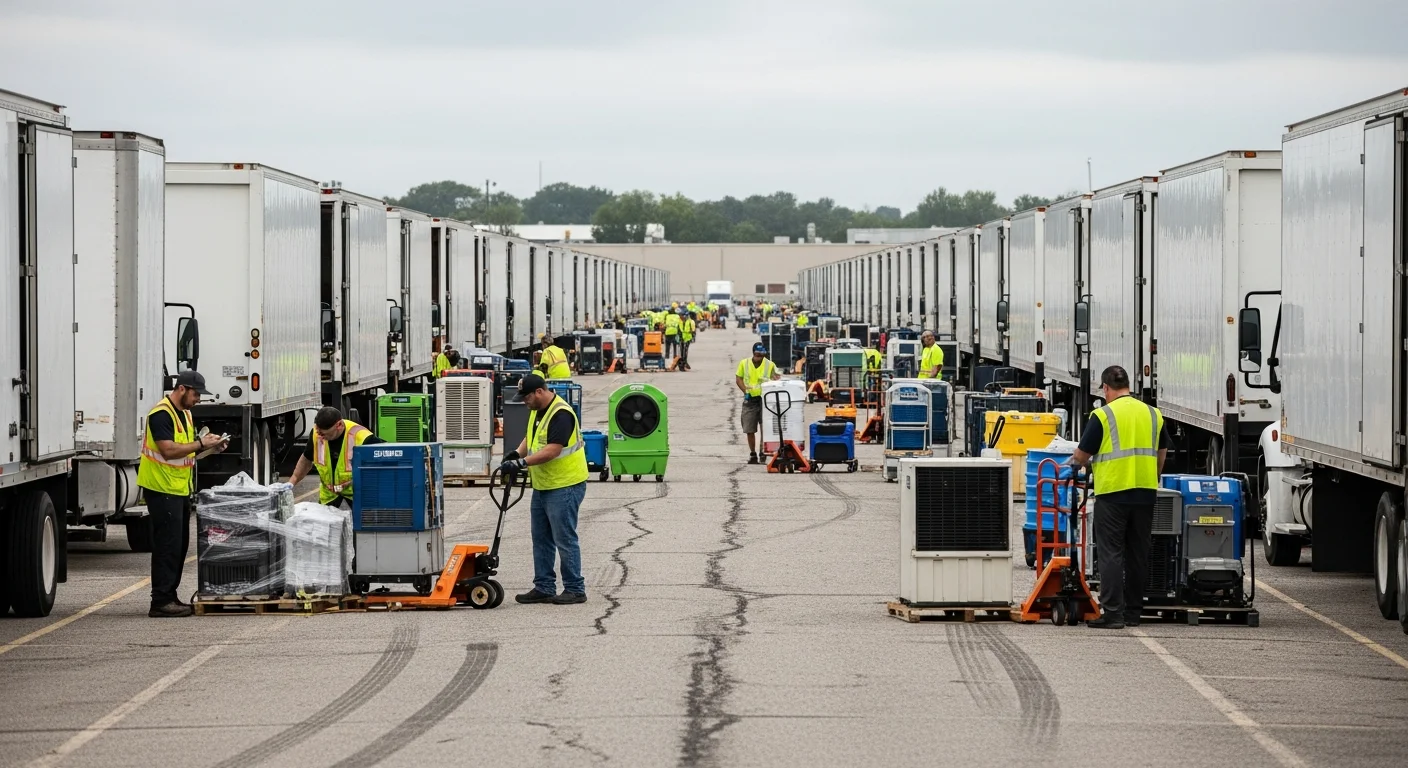
The Case for a Franchise
Standardized training and process. The major franchisors invest heavily in technician training and require crews to follow documented procedures for drying, demolition, and mold handling. You're less likely to get a crew improvising with a rented fan.
Insurance-claim machinery. Franchises live inside the insurance ecosystem — many hold preferred-vendor agreements with major carriers, use the same estimating software your adjuster uses (Xactimate), and know exactly what documentation gets a claim paid. If your loss is large and your adjuster is skeptical, that machinery helps.
Surge capacity. When a hurricane hits three states at once, a franchise network can pull trucks, crews, and dehumidifiers from unaffected territories — the industry's "we're gonna need a bigger boat" moment, except they actually own the bigger boat. No independent can match that. For catastrophe-scale events, it's a genuine advantage — assuming the surge is pointed at your town and not away from it.
The catch: that infrastructure isn't free. Franchisees pay initial investments in the low-to-mid six figures plus ongoing royalty and brand-fund fees — the only royalty taking a cut of your flooded basement — and that overhead lives somewhere in your estimate. Franchises price from standardized rate sheets, which protects you from wild overcharging but leaves little room to negotiate.
The Case for a Local Independent
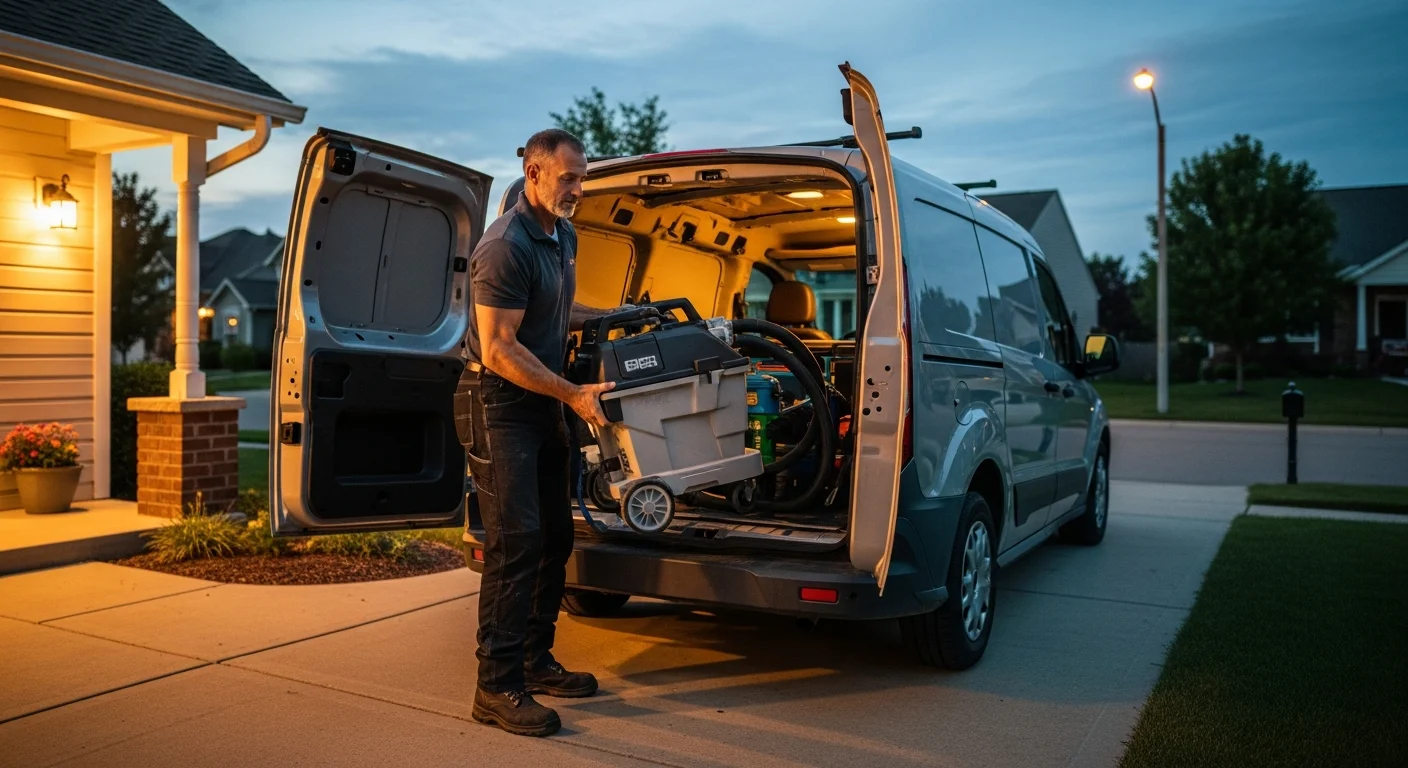
Speed and decision-making. A local owner-operator can be in your driveway in an hour and approve a change of plan on the spot. At a franchise, the crew may be following a prescribed protocol — fine until your situation doesn't fit the protocol. In water damage, where every hour of saturation grows the bill, fast decisions are money.
Pricing flexibility. Independents carry no royalty fees and thinner overhead. They can sharpen a pencil on your estimate, offer to work with your deductible, or phase the work — things a franchise rate sheet doesn't allow. On like-for-like residential losses, independents frequently come in lower.
Accountability with a face. When the owner's name is on the truck, your Google review lands on him, not on a corporate brand with 2,000 other locations to dilute it. The best independents survive entirely on reputation, and it shows.
The catch: "independent" spans everyone from 20-year IICRC-certified masters to a bloke with a wet vac and a dream. There's no corporate standard behind them — vetting is on you. Verify IICRC certification, licensing, insurance, and real local reviews before anyone starts cutting drywall (our 10 questions to ask before hiring guide covers exactly what to check).
What About Cost?
For a typical residential water loss, expect professional restoration to run roughly $1,384–$6,384 depending on category and square footage — see our full water damage cost breakdown for the detail. Where franchise and independent diverge:
| Cost factor | Franchise | Independent |
|---|---|---|
| Estimate basis | Standardized software rates | Market rates; negotiable |
| Overhead in your bill | Royalties, brand fund, national ads | Owner's truck and payroll |
| Insurance billing | Direct-to-carrier, polished | Varies; good ones equal it |
| Second-opinion value | Rarely moves | Often will re-quote |
If insurance is paying and the claim is straightforward, the franchise premium may cost you nothing out of pocket. If you're paying cash — or your quote made you sit down and reconsider your life choices — getting an independent's second opinion is the single highest-value phone call you can make. We put hard numbers on that premium in our SERVPRO cost vs. local restoration companies comparison: the published averages, the per-square-foot rates, and where the 10–25% gap actually comes from.
Which Should You Choose?
Choose a franchise when: the loss is large or commercial, multiple properties are involved, your insurer's preferred-vendor program offers real convenience, or no strong independent serves your area.
Choose a local independent when: it's a single-home loss, speed matters, you're paying out of pocket, or a local company has the reviews and certifications to prove itself. In most towns, the best independent is as good as the best franchisee — and easier to get on the phone.
Either way, vet the actual local operation: IICRC certification, licensing and insurance, recent local reviews, and a written scope before work starts. The logo on the truck is the least reliable signal on that list.
You can compare local companies — franchise and independent, side by side — in our directory, start from your damage type (water, fire and smoke, mold), or jump straight to your metro: Houston, Dallas, or Phoenix.

Frequently Asked Questions
Are franchise restoration companies more expensive than independents?
Often, yes — franchise estimates carry royalty fees, brand-fund contributions, and national marketing overhead, and they price from standardized rate sheets with little room to negotiate. Independents have lower overhead and more pricing flexibility. On insurance-paid claims the difference may not reach your pocket; on cash jobs it usually does.
Is SERVPRO a franchise or corporate company?
SERVPRO is a franchise — each location is independently owned and operated under the national brand. The same is true of ServiceMaster Restore, PuroClean, Paul Davis, and Rainbow Restoration. BELFOR is the notable exception: it's corporately owned rather than franchised.
Do insurance companies prefer franchise restoration companies?
Many carriers run preferred-vendor programs that include the big franchises, which can streamline billing and scheduling. But you are not required to use your insurer's preferred vendor — you have the legal right to choose any qualified restoration company, franchise or independent.
How do I know if a local restoration company is legitimate?
Check for IICRC certification, state licensing where required, proof of liability insurance, and a track record of recent local reviews. A legitimate company will provide all four without hesitation and give you a written scope of work before starting.
Who responds faster — a franchise or a local company?
It depends on the specific operation, but local independents often win on single-home losses — typically 1–2 hours — because the decision-maker is local and the crew isn't routed through a call center. Franchises win when damage is widespread and out-of-area crews need to be mobilized.
Whichever truck ends up in your driveway, make sure you chose it — not the search-ads algorithm, and not the first name your adjuster happened to mention. (You've read this far; you're officially better prepared than 90% of people standing in a wet living room. The other 10% are the ones holding the moisture meters.)