
Smoke damage cleanup explained: what it costs, the step-by-step process, the different soot types, the health risks, and when to DIY versus hire a pro. Your complete 2026 guide.
What is smoke damage cleanup? Smoke damage cleanup is the process of removing soot residue, neutralizing smoke odor, and restoring surfaces and belongings after a fire. Smoke-only cleanup (no structural damage) typically runs $425 to $1,800, involves HEPA vacuuming, specialized soot removal, and deodorizing — and while light cases can be DIY, heavy soot and lingering odor are jobs for a professional.
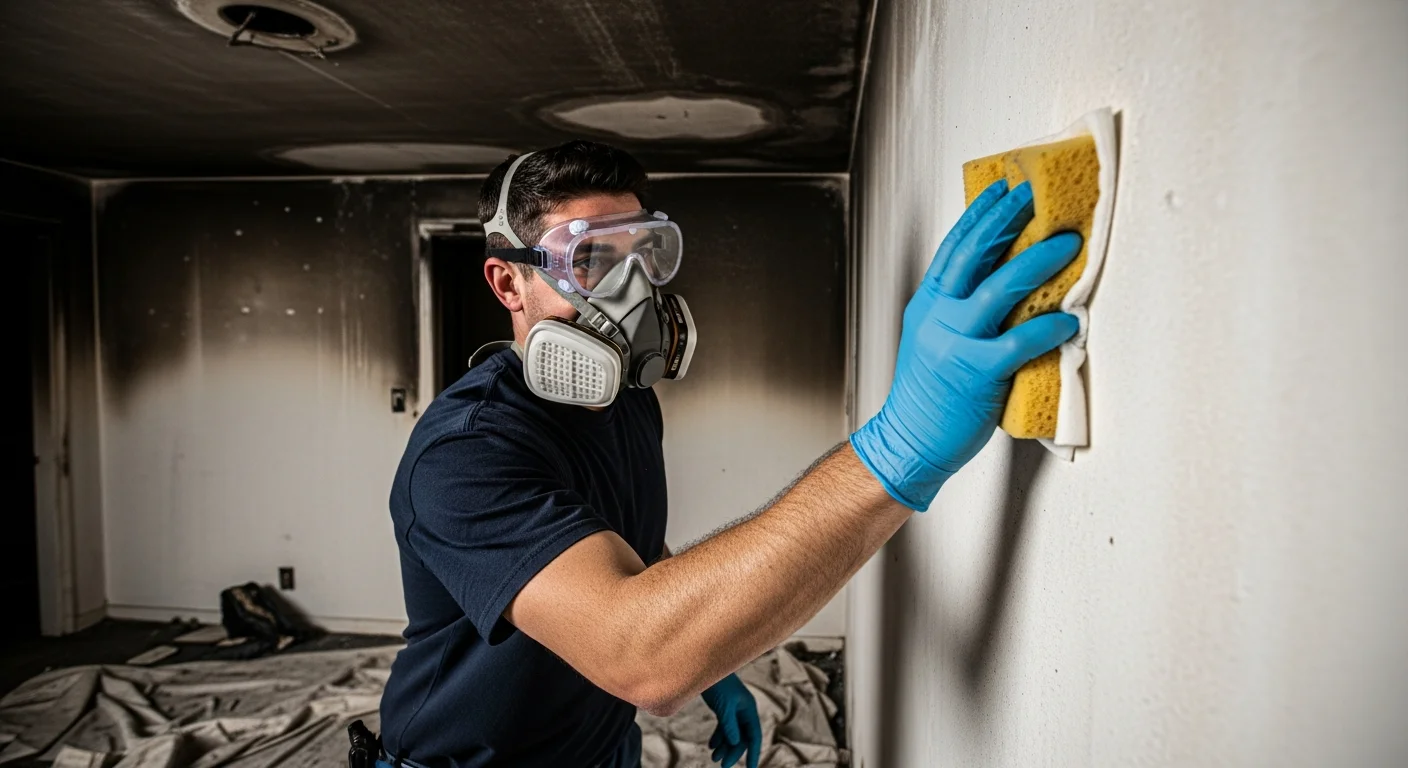
First, if you're reading this the morning after a fire: take a breath. The worst part is already behind you, and unlike the fire, the cleanup will wait until you're ready to deal with it. Smoke is the part of a fire that keeps causing damage after the flames are out. It drifts into rooms the fire never touched, settles into walls and fabrics, and leaves behind soot and a smell that ordinary cleaning tends to spread around rather than remove. If you've ever tried to wipe soot off a wall and just made a longer smudge, you already know the problem (soot 1, sponge 0) — smoke doesn't clean up like ordinary dirt.
This guide is the complete overview: what smoke damage cleanup costs, how the professional process actually works, the soot types that change everything, the health risks worth taking seriously, and where the line sits between a weekend job and a call to the pros. For the deep dives on each part, we'll point you to our detailed guides as we go.
How Much Does Smoke Damage Cleanup Cost?
Smoke-only cleanup — no charred framing, no rebuild — is the cheaper end of fire recovery. National figures put smoke damage cleanup and restoration at roughly $425 to $1,800, materials and labor included, for a typical residential job. Once you add structural fire damage, water from firefighting, and reconstruction, you're into full fire-damage restoration territory, which runs far higher (a national average near $27,000, spanning roughly $3,000 to $50,000+).
| Scope | Typical cost | What's involved |
|---|---|---|
| Light smoke / soot cleanup | $425 – $1,800 | HEPA vacuuming, soot removal, deodorizing one or a few rooms |
| Restoration incl. smoke + water | ~$4.25 – $6.50 / sq ft | Soot cleanup, water extraction, selective repairs |
| Full fire damage restoration | $3,000 – $51,000+ | Smoke cleanup + structural repair + contents + rebuild |
Labor is 50–70% of the total, so local rates drive the price more than almost anything else. For the full cost breakdown from smoke cleanup all the way to a rebuild, see our fire damage restoration cost guide.
The Smoke Damage Cleanup Process, Step by Step
Professional smoke cleanup follows a consistent sequence — and the order matters, because doing it out of order (scrubbing before dry-removing, for instance) drives soot deeper into surfaces.
- Inspection & assessment. A technician surveys the damaged room and every adjacent space, since smoke travels far beyond the burn area. This determines the soot type and the cleaning plan.
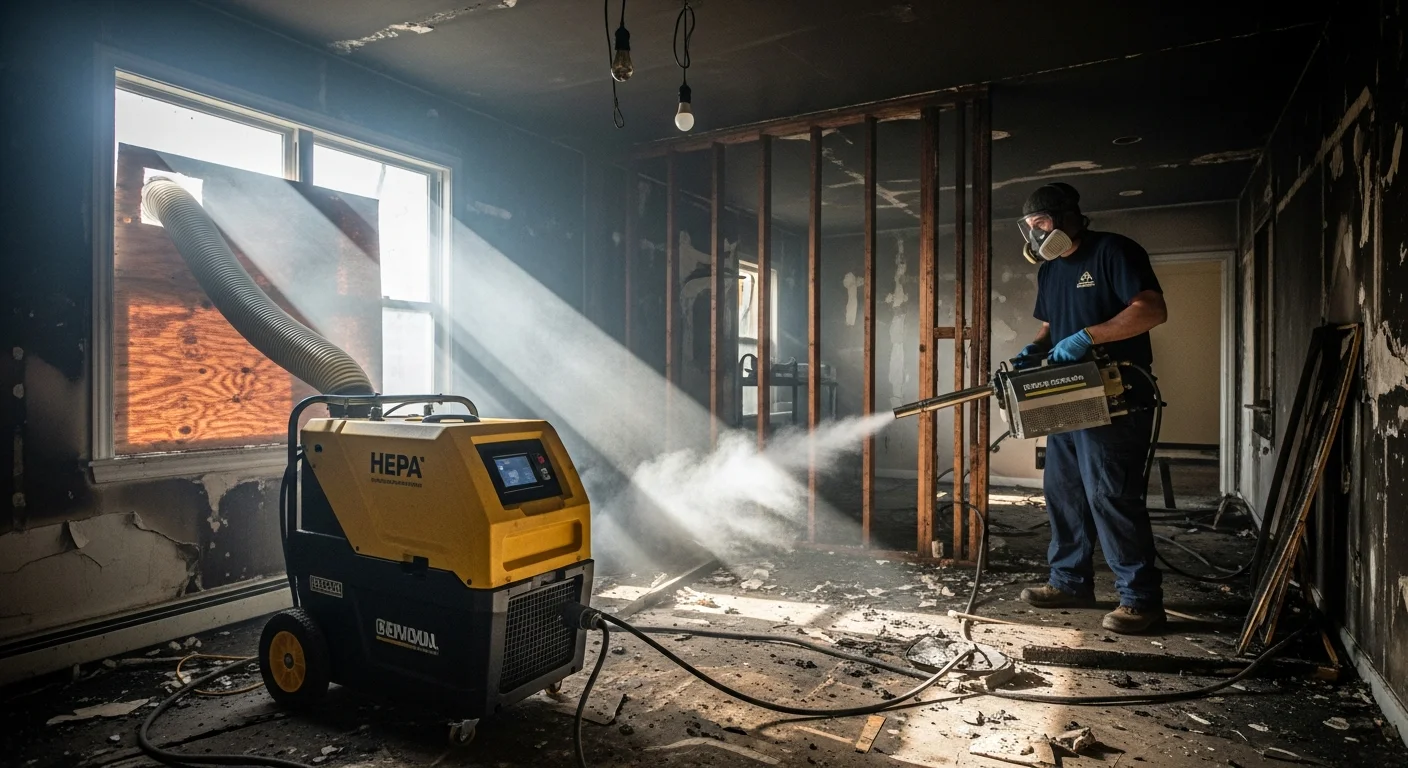
- Stabilize & ventilate. Any emergency safety steps first (boarding up, securing weakened structure), then air movers and HEPA air scrubbers to clear airborne smoke particles.
- Dry soot removal. Loose soot is removed dry first — HEPA vacuum and dry chemical "soot sponges," no water, no scrubbing. This is the step DIYers most often skip, and it's why they smear. Soot rewards patience and punishes enthusiasm.
- Wet cleaning. Only after dry removal: mild soap and warm water or a labeled smoke-cleaning solution appropriate to each surface, then thorough drying.
- Deodorizing. Odor is neutralized at the source with deodorizers, thermal fogging, or ozone treatment — not just masked.
For the full walkthrough of what a professional job looks like, see fire damage restoration: what the cleanup process actually looks like. For the surfaces most people struggle with, our guide on how to clean soot from walls, ceilings, and belongings goes deeper.
Not All Soot Is the Same
The single biggest reason DIY smoke cleanup goes wrong is treating all soot alike. The residue behaves differently depending on what burned and how hot:
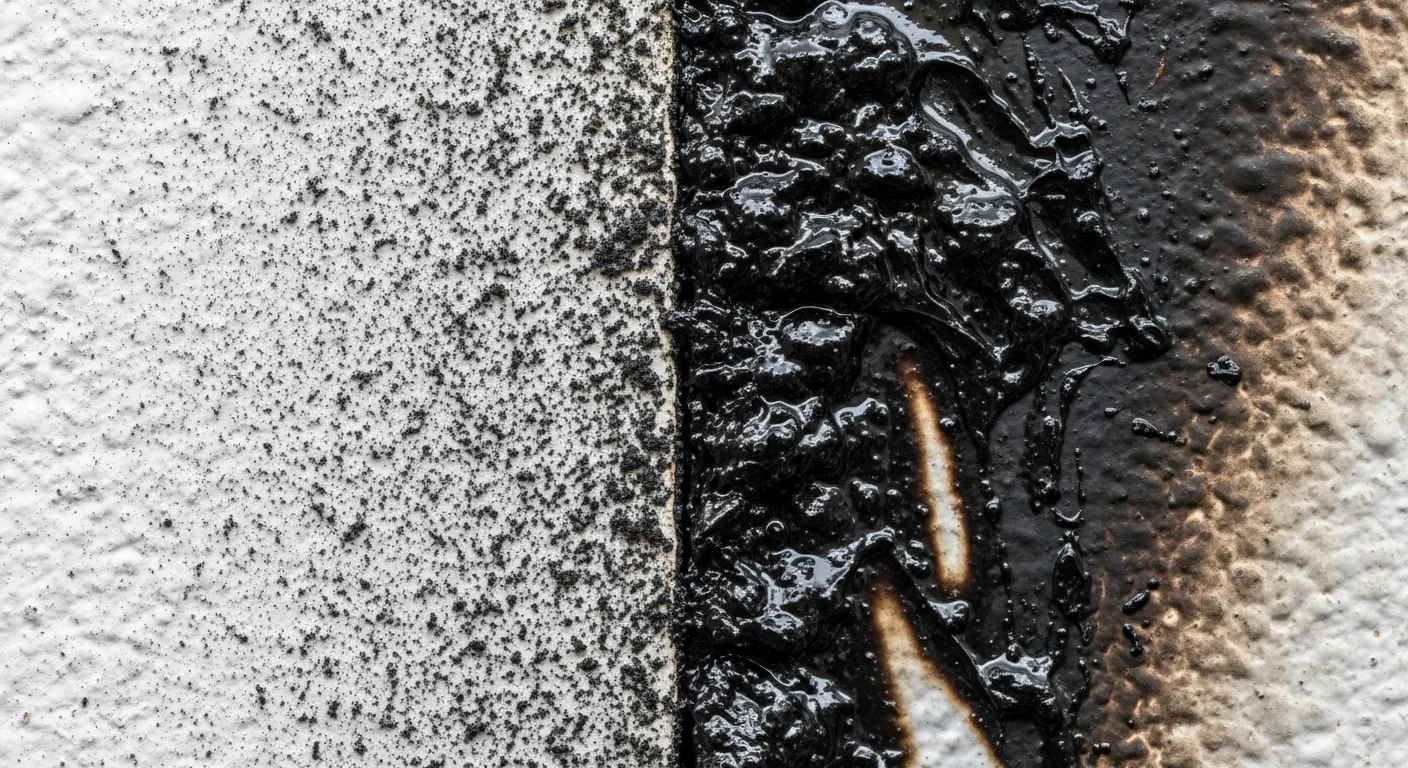
- Dry soot comes from fast, high-temperature fires (paper, wood). It's powdery and doesn't smear, which makes it the easiest to remove — dry methods work well.
- Wet soot comes from slow, smoldering, low-heat fires (plastics, synthetics). It's sticky, greasy, and smears badly if you wipe it — the type most likely to defeat a household sponge.
- Protein residue from burnt food or grease fires is nearly invisible but carries a strong, stubborn odor that clings to everything.
Misidentify the type and you embed the residue deeper. This is exactly where professional experience earns its keep.
The Health Risks Worth Taking Seriously
Soot isn't just dirty — it's a genuine health hazard, and this is the part homeowners underestimate most. Soot particles are fine enough to slip past your body's defenses and lodge deep in your lungs, and the EPA classifies fine-particle pollution like soot as a significant health risk. Fire residue can also carry heavy metals, asbestos, benzene, and formaldehyde from burned building materials, plastics, and paint.
Children, older adults, and anyone with respiratory conditions face the highest risk, and anyone pregnant should stay out of the affected area entirely. If you do any cleanup yourself, proper respirator protection (not a dust mask), gloves, and ventilation aren't optional. When in doubt, this alone is a reason to hand the job to a crew with the right equipment.
DIY vs Professional: Where's the Line?
You can reasonably DIY when all of these are true: the affected area is small, the soot is the dry powdery kind, there's no water damage, the smell is mild, and no vulnerable people are in the home. Light soot on a painted wall in one room, caught early, is a manageable weekend job.
Call a professional when any of these are true:
- The soot is greasy/wet or from a plastic or protein (kitchen) fire.
- More than one room is affected, or smoke reached your HVAC system (which then spreads it everywhere).
- There's water damage alongside the smoke — that becomes a mold risk within 24–48 hours.
- The odor persists after cleaning, which means it's embedded and needs professional smoke odor removal.
- Anyone in the household is pregnant, elderly, young, or has a respiratory condition.
When smoke smell is the main problem, our guide on how to get rid of smoke smell after a fire covers what works and what doesn't.
Frequently Asked Questions
How much does smoke damage cleanup cost?
Smoke-only cleanup with no structural damage typically runs $425 to $1,800 for a residential job, including materials and labor. Once structural repair, water damage, and rebuilding are involved, it becomes full fire damage restoration, which averages around $27,000 and can range from roughly $3,000 to over $50,000.
Can I clean smoke damage myself?
Light, dry soot in a small area with no water damage and no lingering odor can be a DIY job with proper respirator protection. Greasy or protein soot, multiple affected rooms, HVAC involvement, water damage, or persistent odor are jobs for a professional — DIY attempts on these usually smear the soot or leave the smell embedded.
Why does smoke damage smell come back after cleaning?
Because the odor is embedded in porous materials, not just on the surface. Wiping the walls removes visible soot but not the smoke particles trapped in drywall, insulation, fabrics, and HVAC ducts. Neutralizing it requires source-level deodorizing like thermal fogging or ozone treatment, not surface cleaning or air fresheners.
Is soot dangerous to your health?
Yes. Soot particles are small enough to reach deep into the lungs, and fire residue can contain heavy metals, asbestos, benzene, and formaldehyde. Children, older adults, pregnant people, and anyone with respiratory conditions are most at risk and should avoid the affected area until it's professionally cleaned.
How long does smoke damage cleanup take?
A light, single-room soot cleanup can take a day or two. Larger jobs involving multiple rooms, odor treatment, HVAC cleaning, or water damage take longer, and anything requiring reconstruction extends into weeks. Getting a professional assessment is the fastest way to a realistic timeline for your situation.
The Bottom Line
Smoke damage cleanup is cheaper and faster than full fire restoration, but it's deceptively technical — the soot type, the health hazards, and the embedded odor are why a wipe-down so often makes things worse. (Embedded smoke odor is a bit like the Hotel California of household smells: it can check out any time it likes, but without source-level treatment it never quite leaves.) Light, dry soot in one room can be a DIY job with the right protection. Anything greasy, widespread, water-adjacent, or smelly is a professional's job, and trying to save on it usually costs more later.
If the smoke reached more than one room or the smell won't quit, find a local fire and smoke restoration company through RestoreNearMe's directory — with certifications, services, and reviews shown side by side, so you can pick the right crew for the job. A fire is more than enough for one lifetime; the cleanup doesn't have to be the sequel.